The Memory of Spring
In the Lebanese mountains, spring never arrives all at once.
It settles in slowly, like a hesitant breath between the end of winter and the return of the sun. The mornings remain cold, winds still sweep through the valleys, and storms can appear without warning. Then suddenly, the light shifts. The earth begins to warm. Trees start to bud. Birds return to build their nests. Insects reappear. The vineyard awakens.
In Lebanon, especially in mountain villages, Spring has never been just a season. It has always been a passage. A transition deeply tied to the land, to the agricultural rhythm, and to a collective memory passed down through generations.
Long before the word “terroir” became associated with wine or gastronomy, it already existed in the daily gestures of rural families. In the way they walked the fields, recognized the first wild herbs, waited for the season’s first still-sour fruits, or felt the shift in temperature through the stones of old houses.
After the long winter months, resources in the highlands were limited. Reserves would run low, and gardens had yet to yield their summer crops. So the wild became essential. Spontaneous plants nourished families. Herbs were gathered from the hillsides – tender shoots, bitter leaves, wild flowers. A cuisine born out of necessity, which over time became a culture, then an identity.
Lebanese spring still carries these ancestral instincts today.
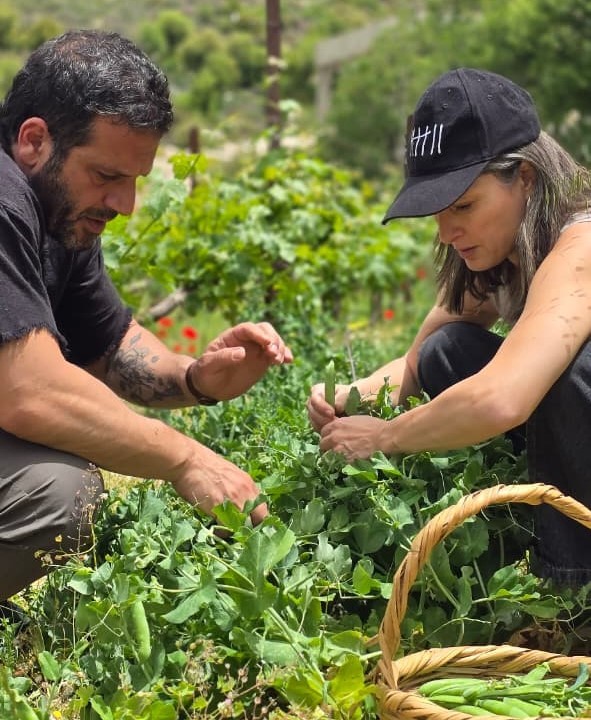
Eating green almonds with salt. Biting into fresh fava beans and raw peas straight from the fields. Waiting for the first green plums, still firm and tangy. Gathering wild thyme, chicory, asparagus, and young leaves growing between stones and forgotten terraces.
These simple gestures tell of a relationship with the living world that goes far beyond gastronomy. They speak of a time when people lived in exact rhythm with the seasons, dependent on climate, sky, harvests, and what the land was willing to offer at any given moment.
Spring in Lebanon still holds something unfinished, something fragile. It is not yet summer. Warmth arrives, then disappears. Cold lingers in the shadows of the mountains. This duality creates a deeply alive, almost restless season, where everything seems to begin again with renewed energy.
In the vineyards, the first buds appear after months of dormancy. The soil becomes covered with grasses and wildflowers. Bees return. Days grow longer. Nature, in its entirety, enters a state of rebirth.
And perhaps this is, at its core, the true heritage of the Lebanese mountains: the ability to remain connected to natural cycles, to recognize the return of life in the simplest details, and to preserve ancient gestures that continue, despite time, to give profound meaning to the word terroir.