Recent research conducted in Calabria has brought something deeply ancient to light: among the old grape varieties rediscovered in southern Italy are cultivars whose genetic and historical roots cross the Mediterranean, reaching toward Greece, Cyprus, and Lebanon. Among them: Merweh.
For some, this comes as a surprise. For others, a confirmation. For me, it feels like an obvious truth — the clear sense that the land remembers before we do, and often better than we do.
Merweh did not enter my life when I began making wine. On the contrary, it was Merweh that led me to it. Long before cellars, bottles, or even words, it already existed within my inner landscape.
It is tied to childhood memories – to summers spent in the village of Nehla at my grandparents’ home. Holidays with my cousins, long days lost in the mountains, among olive groves, forests, and dirt paths. We would walk for hours, grow thirsty, and quench it with the golden grapes hanging from the vines. Those grapes were Merweh. They were simply part of the landscape, without name, without question.
Then came the harvest. Merweh for arak, for raisins, for molasses. Days shared with teta, jedo, and my father — the whole family gathered, moving slowly along the mountain paths on the back of a donkey. These gestures were not projects. They were a way of living, of transmitting, of inhabiting the land.
It was by returning to these memories that I understood Merweh is not only part of my family’s story, but part of our identity — the identity of the mountain itself. Working with it today, giving it space, voice, and value again, is not simply a viticultural choice. It is a return to the source, and above all a confirmation of our terroirs’ identity. A fidelity to something deeply rooted, transmitted, alive.
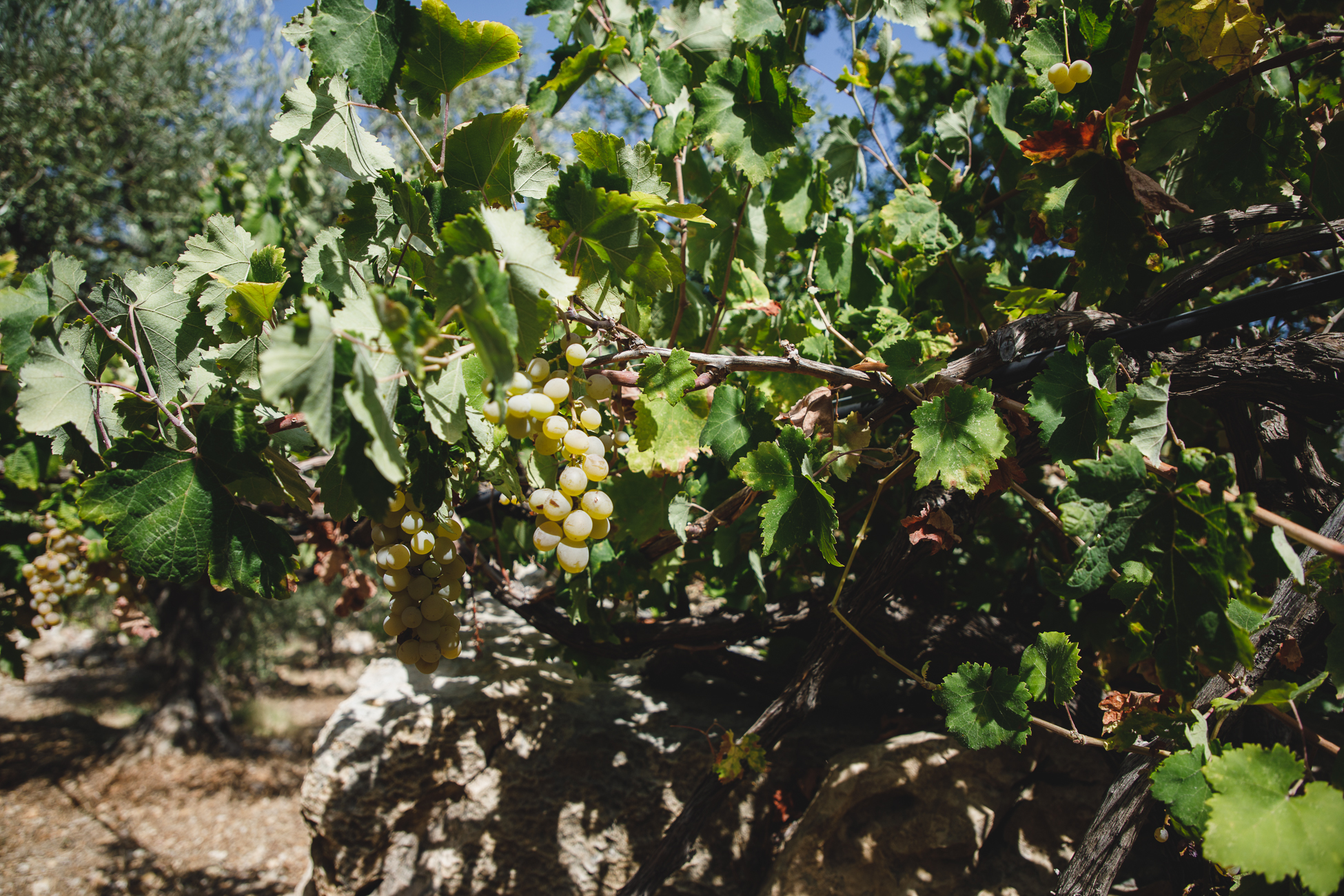
And yet, for years, this grape was questioned. Its origin debated. Its legitimacy doubted — as if its value could only exist once validated by an external voice, by an analysis, by a laboratory. This reflex is familiar in Lebanon. It does not reflect a rejection of our heritage, but rather a fragility shaped by history — that of a country that has learned to doubt itself. But vines do not ask for permission.
Merweh grows across the Lebanese mountains, from lower altitudes to higher elevations. It survives in old parcels — sometimes forgotten, sometimes preserved through habit and continuity. These vines were not planted to prove anything. They were planted to nourish, to distill, to transmit. Their presence is not incidental. It is deeply rooted.
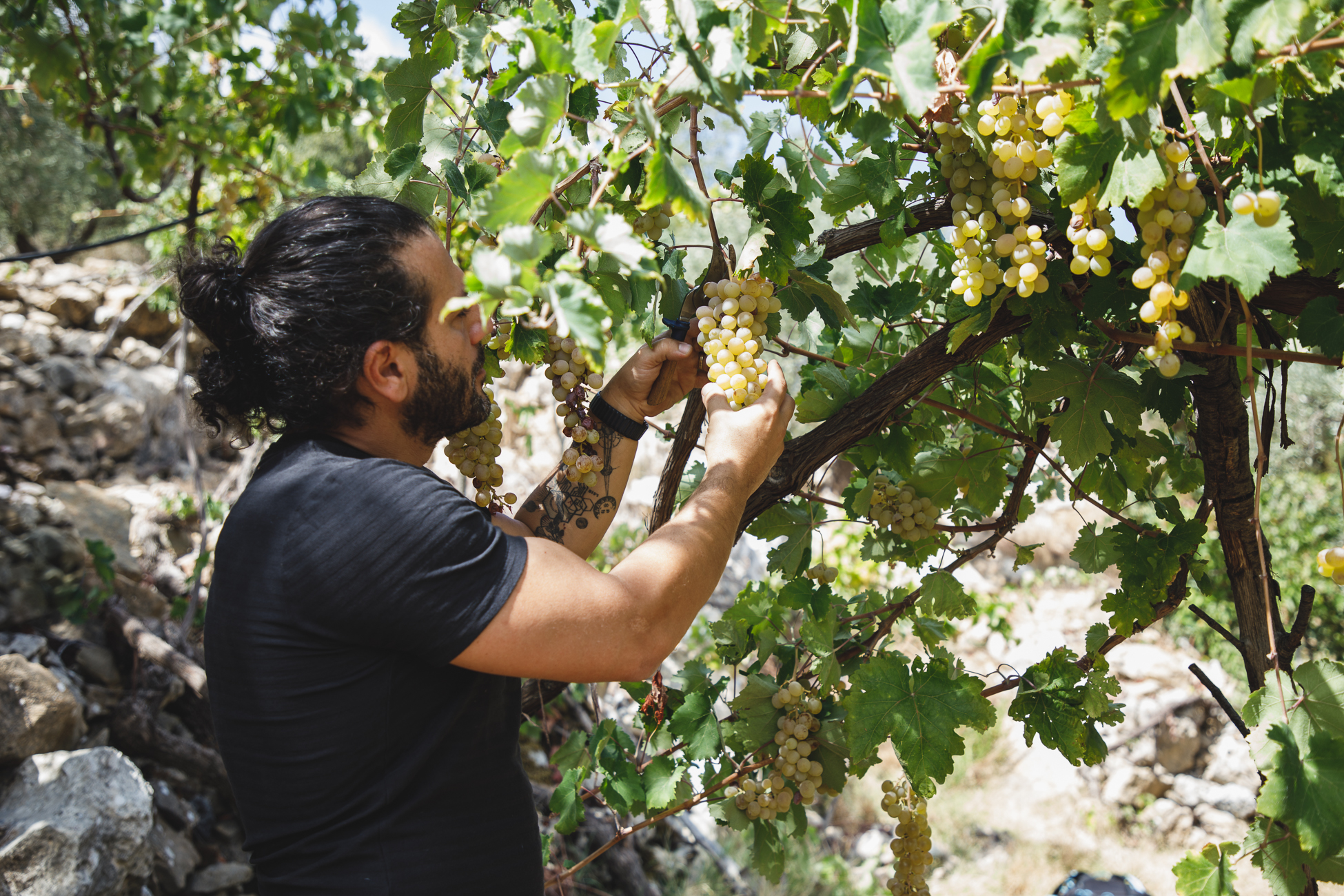
The recent research does not change this story. It confirms it in another way. It reminds us that the Mediterranean has never been static, but a space of circulation, exchange, and movement. That vines traveled with people and civilizations. Finding traces of Merweh elsewhere is not a contradiction. It is a footprint.
The real question has never been origin. The real question has always been trust — trusting our land, our farmers, and the silent intelligence of vines that have crossed centuries.
Merweh is only one voice among others. Alongside it stand Obeideh, Zitani, and other still little-known varieties. Working with them rigorously and respectfully is not an act of nostalgia. It is an act of responsibility.
Identity is not something we invent or defend. It is something we cultivate, slowly, over time.
If Merweh speaks today — in the vineyards and in the bottles — it is not because we have given it a voice. It is because it always had something to say.