Winter is the season of silence in the vineyard.
The leaves have fallen and the vine has entered its dormant phase. In this apparent calm begins one of the most important gestures in the work of the winemaker: pruning.
Pruning a vine is not a simple technical act. It is a dialogue. Every cut commits the harvests to come. Behind this gesture lies the very essence of the craft: finding for each vine the right balance between vigor and production.
Pruning certainly serves to prepare the future harvest. But in reality, it is above all about understanding each vine individually. Reading its history, observing its shape, recognizing its wounds, sensing its vigor. From there, the winemaker tries to give it what it needs in order to produce in harmony.
It is a silent language between the human and the plant.
In our vineyard, this practice is part of a biodynamic approach. A philosophy we have followed from the beginning, but whose roots go much further back in my memory.
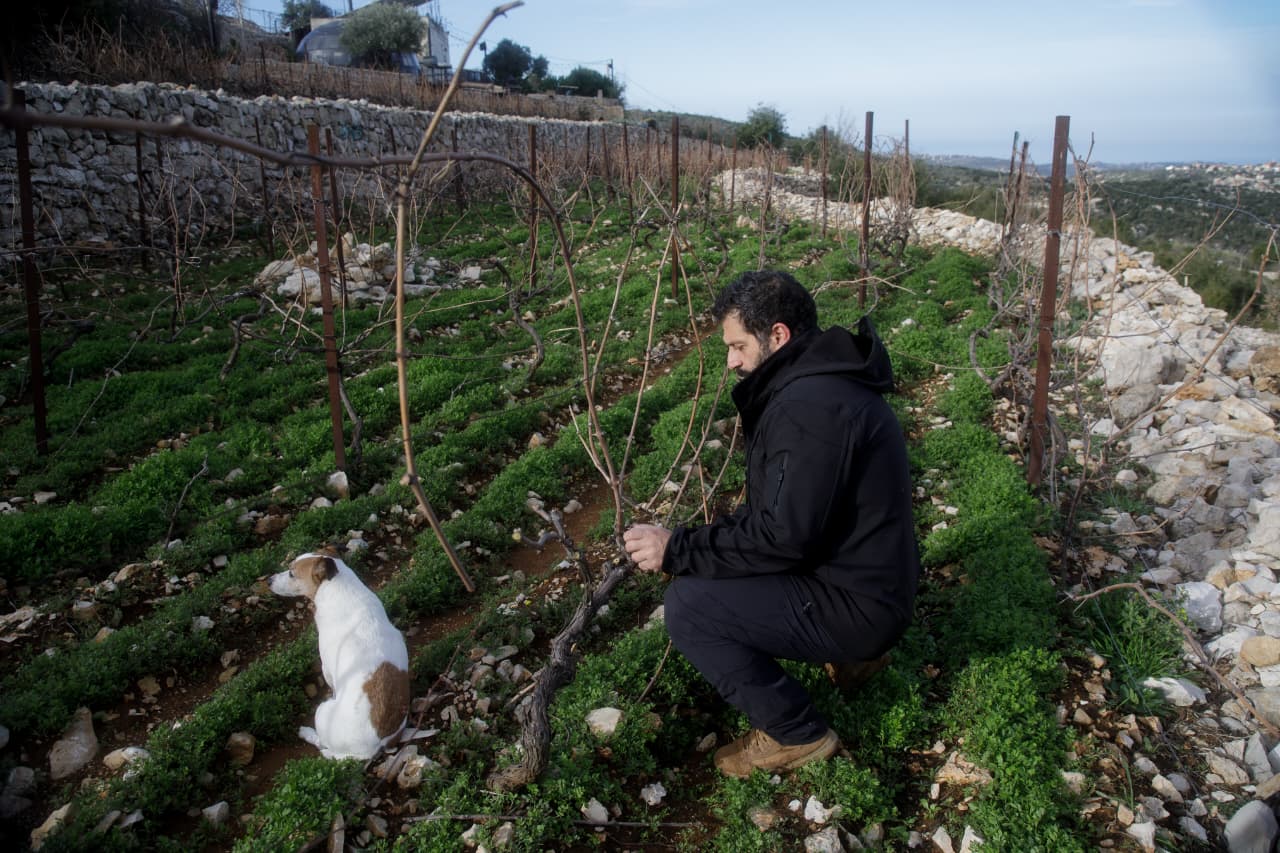
I remember my grandparents in the village. They would count the days on their fingers to know where we were in the lunar calendar and determine the right moment to work the land. Agricultural gestures followed the rhythm of the sky.
Even today, when the time comes to prune, I try to reconnect with that ancient wisdom.
First, I wait for the heart of winter, the coldest days of the year. In the past, this often meant frost or snow. Today, with climate change, these signs have become rarer, but I still wait for the moment when the vine is at its deepest rest.
Then, I look at the moon.
I prefer to prune when the moon is descending, when the plant’s energy concentrates toward the soil and the roots. Because pruning means wounding the vine. It means cutting a part of it. When the sap—the blood of the vine—has already descended toward the roots, the risk of hemorrhage is reduced and healing happens more naturally.
All the vitality then remains preserved in the roots, ready to rise again with the first days of spring.
These pruning days then become days of dialogue.
I walk row after row, vine after vine. I remember some of them, their behavior in previous years, their strength or their fragility. I try to rebalance them, both aesthetically and productively.
It is a language that connects the past, the present, and the future. A silent conversation between human beings, nature, and the invisible forces that run through living things.
For me, these moments are deeply soothing. They are a form of meditation. A way to reconnect with the earth.
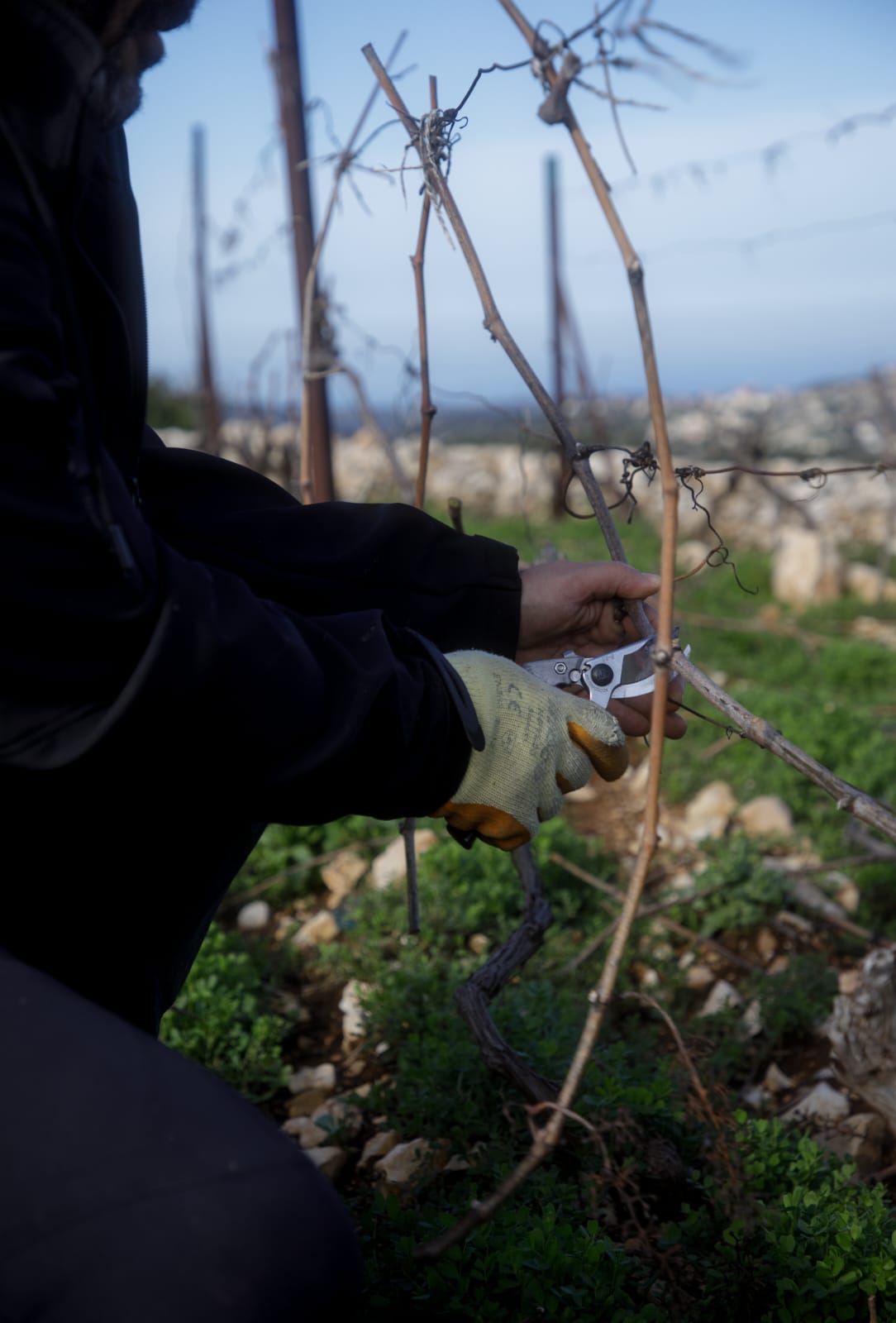
But this year, that silence is disturbed.
While I prune, in the distance, the sound of bombardments echoes. The war shaking the region makes all of Lebanon tremble. The images of families fleeing their villages in their cars remind me of my childhood.
I remember my parents who, with every bombardment, would take the road to bring us to the village. The very village where I stand today, in this vineyard, pruning shears in hand.
Back then, we were children displaced by war.
Today I realize that if I am here, if I became a winemaker in this village, it is also because the war brought me here as a child.
It was during those years spent with my grandparents, those silent heroes of the mountains, that I learned the language of the land. I watched them work, listen to the seasons, and observe the moon. It was there that the path that would one day bring me back here began to take shape—without me even realizing it.
Today, other children are living this same story.
So when I see these families on the road, I cannot help but hope.
I hope that among these children, some will one day find in these painful memories a source of inspiration. That they will return one day to their village, to their country, to plant something there.
A vine.
A house.
A project.
Something that will root them once again in this land.
Because roots are powerful. They travel through time, memory, and hardship. And sometimes, even in the most wounded soils, they still find the strength to bring life back.
Maher Harb
Winemaker